NA optimized Type 918 engine build.
A naturally-aspirated conversion of the Lotus Type 918 V8, paired with a chassis upgrade. These are first thoughts, not a finished spec — a starting point to open the conversation with the builder. 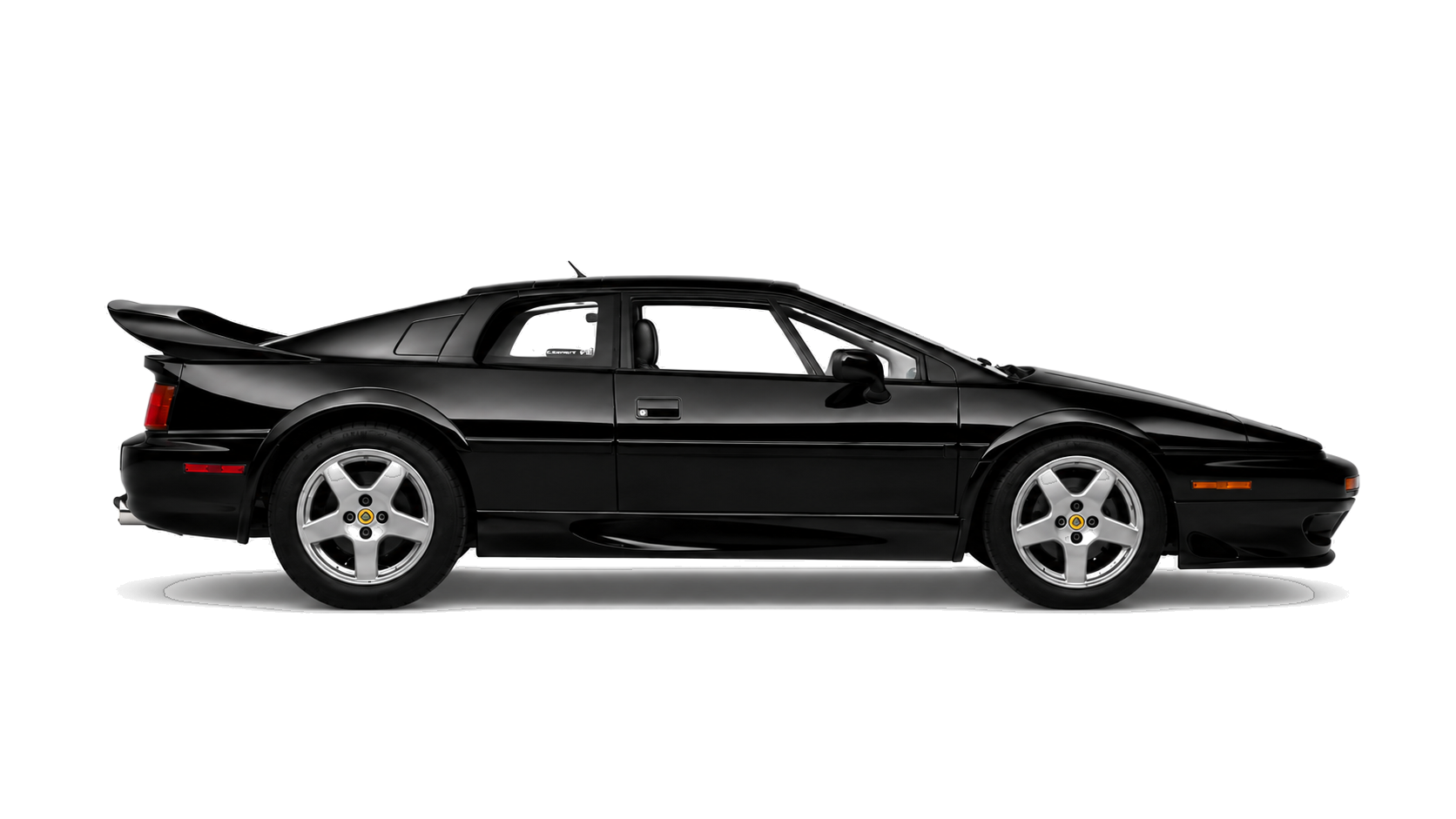
Build intent — track-biased but street-usable, maximizing Type 918 character (throttle response, sound, high-rpm ITB feel). Priorities, in order:
- Reliability / longevity — the 918 block is irreplaceable
- Engine character
- Drivability — usable from 3000 rpm, clean idle
- Peak power
Power target 300–330 whp (≈ 345–385 hp at the crank, ~100–110 hp/L — F355/360-level specific output, which is a realistic ceiling for a ported 1990s turbo casting); bottom end, oil, and cooling spec'd for 400+ whp so the engine loafs at its actual output.
Secondary goal — replicability: documented so others on the platform can copy it, but only as a tiebreaker, not a priority.



Build Sequence
- Port heads → flow bench → actual numbers.
- Spec cam against measured flow.
- Piston-to-valve clearance → finalize piston dome (sets CR).
- Plenum runner length around cam timing + rpm target.
- Assemble → calibrate.
Cam / head / piston / plenum are coupled, so this order makes sense to me — but the sequencing is ultimately the builder's to set.
Engine — Build Notes
Bottom End
- Pistons: forged, custom — spec to target CR, ring pack, bore. Finalize dome after cam (see Build Sequence).
- Rods: billet H-beam; ARP2000 or Custom Age 625+ bolts.
- Bearings: coated, rod + main.
- Studs: ARP main + head throughout.
- Crank: inspect, polish, reuse if in spec; billet only if necessary.
- Balance: weight-matched, tight tolerance.
- Block: push-fit wet liners — reline as needed (off-the-shelf Westwood L5188 returns stock 83.00mm bore). Factory main caps are already cross-bolted SG iron; upgrade only if inspection warrants.
Compression and Fuel
- Static CR: I'm thinking 11.0–11.5:1 — kept conservative because it has to stay pump-gas (91–93) safe with port/ITB injection, a 1990s chamber, and no DI charge cooling. A starting target, open to the builder's recommendation.
- Flex fuel, dual maps blended continuously on ethanol %. Pump-gas map: streetable + knock margin. E85 map: timing-advanced for max output. (My instinct is to gain E85 power through timing rather than a CR pump gas can't tolerate — but that's a builder/tuner call.)
- Knock is a low/mid-rpm, high-load issue (WOT near torque peak, lugging) — not high-rpm. Keep timing conservative there.
Displacement
- Retain stock bore and displacement: 83mm × 81mm, 3506cc. Hone-and-refresh only; reline to stock bore if a cylinder needs it (push-fit wet liners — an established repair). No overbore, no stroke.
- Rationale (reinforced by the goal of a replicable build): one shareable piston/ring/gasket spec, works across variably-worn used cores, protects the finite supply of irreplaceable blocks, and keeps calibration and expected numbers transferable between builds.
- Overbore gain is marginal (~+2.4% at a +1mm cleanup); the meaningful 85–86mm version means custom wet liners with no documented precedent — not worth it as the default plan, least of all in a build others will copy. If that path is explored anyway, see Larger Bore Options below.
Larger Bore Options (if explored)
The baseline above is stock bore. If more displacement is wanted anyway, this is the ladder and the process I'd follow — informed by what the block actually is.
What the block actually is (Lotus service notes; period engineering coverage): thin-wall sand-cast LM25TF aluminum, open deck, with push-fit cast-iron wet liners — spigotted into the block, seated on a flange near the bottom of the swept volume, sealed at the base with liquid sealant (Hylomar 3400 per the June 2000 service bulletin), and clamped in place by the heads. Liners are individually removable, and relining is an established repair: Westwood Cylinder Liners catalogs a finished 83.00mm ductile-iron 918 liner (part L5188). Bore centers are 96mm — a single period source; verify on the block.
What that means for a bigger bore — this is not a Darton-style dry resleeve into parent metal; it's custom wet liners. If the stock liner wall is thick enough, a larger ID at the stock OD requires no block machining at all. The liner's OD and wall thickness are published nowhere, so one measurement session answers most of the feasibility question. The constraints aren't "breaking into the water jacket" — they're liner wall thickness, the coolant annulus (coolant circulates fully around each liner; a larger OD shrinks it), the gasket sealing land between bores (13mm at stock, ~10mm at 86mm), and liner nip — the head clamp is part of liner retention, so liner and gasket specs are coupled.
Why bore rather than stroke — on a head-limited build, the real prize of a bigger bore isn't the displacement, it's unshrouding the valves: it buys the larger valves and seat work the heads otherwise can't take. Stroking does nothing for that and raises piston speed (the stock 81mm stroke at 8200 rpm is already ~22 m/s mean piston speed).
Options, smallest to largest:
| Bore | Displacement | Gain | Method |
|---|---|---|---|
| 83mm (stock) | 3506cc | — | Hone / refresh, or new stock liners (Westwood L5188) — the baseline plan |
| 83.5–84mm | 3548–3591cc | +1.2–2.4% | Bore the existing liners, if measured wall thickness allows |
| 85–86mm | 3677–3764cc | +4.9–7.4% | Custom wet liners — stock OD if wall allows; larger OD costs coolant annulus + seat machining |
| 87mm+ | 3852cc+ | +9.9%+ | Likely off the table — sealing land between bores thins at 96mm centers, and sealing rides on liner nip |
Power scales with displacement only if head flow scales with it — without the matching valve and port work, a bigger bore mostly just moves the torque peak down. Realistic gain at 86mm with the matching head work: roughly +15–25 whp over the stock-bore build.
Process — gates, in order:
- Pull one liner and measure everything — OD, wall thickness, flange/spigot geometry, seat condition, jacket clearance. Liners are push-fit; this is cheap data (far cheaper than sonic-mapping a parent-bore block).
- Verify the 96mm bore-center figure on the actual block — it's single-sourced.
- Take the measurements to a liner maker — Westwood already produces the stock 918 liner and takes bespoke enquiries — and have them spec wall, OD, flange, and nip height for the target bore.
- Custom MLS head gasket to the new bore (only the OEM-spec Elring set is catalogued; a custom Cometic-type is routine, but the liner-nip spec must be developed together with it).
- If a larger liner OD is required: machining the liner seats is the one irreversible op on an irreplaceable casting — only with proven margin, torque plates fitted, block at temperature.
- Cooling review — any OD increase shrinks the coolant annulus on an engine already spec'd for sustained track use.
- Re-run the Build Sequence from step 1 — a bigger bore changes valve options, chamber shape, piston dome, CR, and cam targets.
Costs and caveats — there is no documented precedent: no surveyed Esprit V8 build has overbored, oversleeved, or stroked a 918, and the oft-repeated claim that Lotus designed in "+3mm of bore headroom toward 4 litres" did not survive source-checking — don't lean on it. This would be a first-of-its-kind job. Budget roughly +$5–12k and +2–3 months if the stock-OD liner path works; more if seats must be machined. Replicability survives better than a one-off overbore would suggest — a proven custom liner spec can simply be reordered — but the decision gate stands: measured liner and jacket numbers first, a liner maker willing to put their name on the spec, and head work that actually uses the displacement.
Cylinder Heads (highest-risk item)
- Full inspection; valve job; guides as needed.
- Mild-to-moderate port — flow consistency and improvement within casting limits.
- Modest valve-size increase only if chamber/seat geometry allow.
- Flow-bench before and after — actual numbers, not projected.
- Lock cam profile and induction tuning after flow numbers, not before.
Camshafts
- Custom NA grind, designed against measured head flow; match to target rpm + induction tuning.
- Adjustable timing (vernier gears / offset keys) for dyno.
- I'd lean dual springs over beehives for sustained 8000+ rpm; retainers (steel or Ti) per the final profile — the builder's call.
Induction
- ITBs, off-the-shelf where possible (45–48mm), custom adapter manifolds to head ports. Bore and trumpet/runner lengths from VE targets at intended rpm.
- Sand-cast aluminum plenum (F355 aesthetic) — runner length/volume math first; velocity stacks matched to plenum; retain pattern for spares.
- Drive-by-wire throttle.
- Cold air rear-fed: Esprit side scoops → airboxes at the tail → forward to plenum (back-to-front, per F355). Airbox chassis-mounted, coupled to engine-mounted throttle bodies via flexible bellows.
- Accessory/belt drive is at the front of the engine (transaxle aft) — opposite end from the rear intake; route accordingly.
- Dual injectors per cylinder under consideration for E85 headroom.
- Clearance: stack + plenum height must clear engine cover / rear deck — mock up before finalizing geometry.
Fuel and Ignition
- Standalone ECU (MoTeC / Cosworth Pectel / EFI Euro — tuner's call). Full custom harness.
- Individual coil-on-plug.
- Flex sensor; continuous ethanol-blended calibration.
- Load sensing: Alpha-N (TPS + rpm) or TPS/MAP hybrid — no usable MAP signal with ITBs.
- Wideband O2 per bank minimum; EGT optional for initial mapping.
- Per-cylinder knock detection where supported — backstop only (ITB / solid-valvetrain noise); base timing stays conservative.
- E85-capable fuel system end to end (pump, lines, seals, rails, regulator) sized for ~30–40% greater volume.
Oil
- Dry sump. Scavenge staging per pan/crankcase — a 90° V8 typically wants 4+ scavenge stages + 1 pressure ("3+1" is a floor to validate).
- Oil tank with anti-aeration baffling. Thermostatic oil cooler, routed.
- Lower engine in chassis if mounts permit (CG).
Cooling
- Upsized radiator core + improved ducting.
- Higher-flow water pump or supplementary electric pump.
- Dedicated transmission cooler (UN1).
- Proper bleed routing for mid-engine layout.
- Spec for sustained track use, not just street.
Exhaust
- Custom equal-length headers, stainless or Inconel. Primary length to target rpm + flat-plane firing order.
- Merge collectors; X or H-pipe between banks (less critical with the flat-plane crank's even per-bank firing — builder's call).
- Modest muffler — streetable without killing the note.
- Wrap / ceramic coat for the tight bay.
Brakes / Vacuum
- ITBs make little manifold vacuum → electric vacuum pump for the brake booster; delete or replace other vacuum-dependent accessories.
Chassis — Build Notes
Transmission
- Renault UN1 + full upgrade kit (gears, bearings, LSD). Setup by Lotus PBC. Dedicated cooler.
- Torque, not hp, is what breaks gearboxes — and the NA build's ~265–290 lb-ft sits below the 295 lb-ft Lotus capped the stock engine at for this box. The upgrade kit is for track duty, rpm, and shift abuse, not because the rating is exceeded.
Suspension
- MCS 3-way adjustable dampers, front and rear.
- Spring rates / geometry around modern tire grip + use case.
- Corner-balance after all weight changes (dry-sump tank, plenum, headers) are final.
Tires
- Modern compound (Cup 2 / Trofeo R / equivalent), staggered, grip-first.
Open Items
Where builder experience matters most:
- Head flow ceiling = dominant power variable. 1990s turbo casting, no NA porting program; limited valve-size growth; risk of breaking into water/oil jackets on an irreplaceable core. Likely lands 290–320 whp; 320–350 only with favorable porting. (Calibration point: Ferrari's own 3.5L NA program — the F355, five valves per cylinder, no turbo-casting compromises — made 375 crank hp, ≈ 330 whp.)
- Block is irreplaceable — any crack, water-jacket corrosion, or main-saddle damage found at inspection could end the build. Protection: ARP studs, generous oil control, conservative static CR, knock detection as backstop.
- Calibration: one-off ITB flat-plane + flex = no base map. Budget ~40–80 hr dyno, refined over the first 1000–2000 miles.
Targets (rough)
My rough projections to frame expectations — the real numbers come from the builder's read on the heads and the dyno.
| Metric | Pump Gas (91–93) | E85 |
|---|---|---|
| Peak power (whp) | 300–330 | 315–345 |
| Peak torque (wheel lb-ft) | 225–250 | 235–260 |
| Power peak (rpm) | 7600–8200 | 7800–8200 |
| Torque peak (rpm) | 6200–6800 | 6500–7000 |
| Redline | 8000–8200 | 8000–8200 |
- Crank torque lands around 265–290 lb-ft — below the 295 lb-ft Lotus capped the stock turbo engine at to protect the UN1. The character gain is response and rpm, not torque.
- Useful floor: Lotus's own NA design point for the 918 was 280 bhp @ 6800 rpm (possibly paper-only, never confirmed as running hardware). This build's porting, ITBs, cams, and +1400 rpm are what buy the gap from there to ~345–400 crank hp.
- E85 on an NA engine is worth ~3–6% (charge cooling + timing), not the transformative gains it gives boosted builds.
- Curb ~1380–1420 kg; ~245–290 hp/tonne at the crank (≈ 345–400 crank hp).
- Straight-line ≈ 996/997-era GT3 — comfortably ahead of any factory Esprit — with a more distinctive engine.
- Powerband (rough): tractable below 3000; building 3000–4500; alive 4500–6000; peak 6000–8200. Instant throttle, no lag.
Timeline (rough)
A rough placeholder — the builder's schedule and lead times replace this.
- ~24 months (range 18–30) from contract to shakedown complete.
- Long poles: plenum pattern + casting (4–6 mo), custom rotating assembly, header fab (waits on engine mock-up), calibration.
Build Status
To be updated as the project progresses.
- [ ] Contract signed with builder
- [ ] Engine removed and disassembled
- [ ] Block inspection complete
- [ ] Head flow benchmarking complete
- [ ] Rotating assembly machined
- [ ] Cam profile finalized
- [ ] Plenum pattern complete
- [ ] Plenum cast and machined
- [ ] Engine assembled
- [ ] Engine mock-up in chassis
- [ ] Initial calibration on dyno
- [ ] Shakedown miles begun
- [ ] Build considered complete
Last updated: June 9, 2026