Supercharged Type 918 engine build.
A supercharged conversion of the Lotus Type 918 V8 — the twin turbos come off and a belt-driven supercharger goes on — paired with a chassis upgrade. The sibling to 918NA, which covers the naturally-aspirated route; the block facts, displacement reasoning, and larger-bore notes there apply here too. These are first thoughts, not a finished spec — a starting point to open the conversation with the builder.
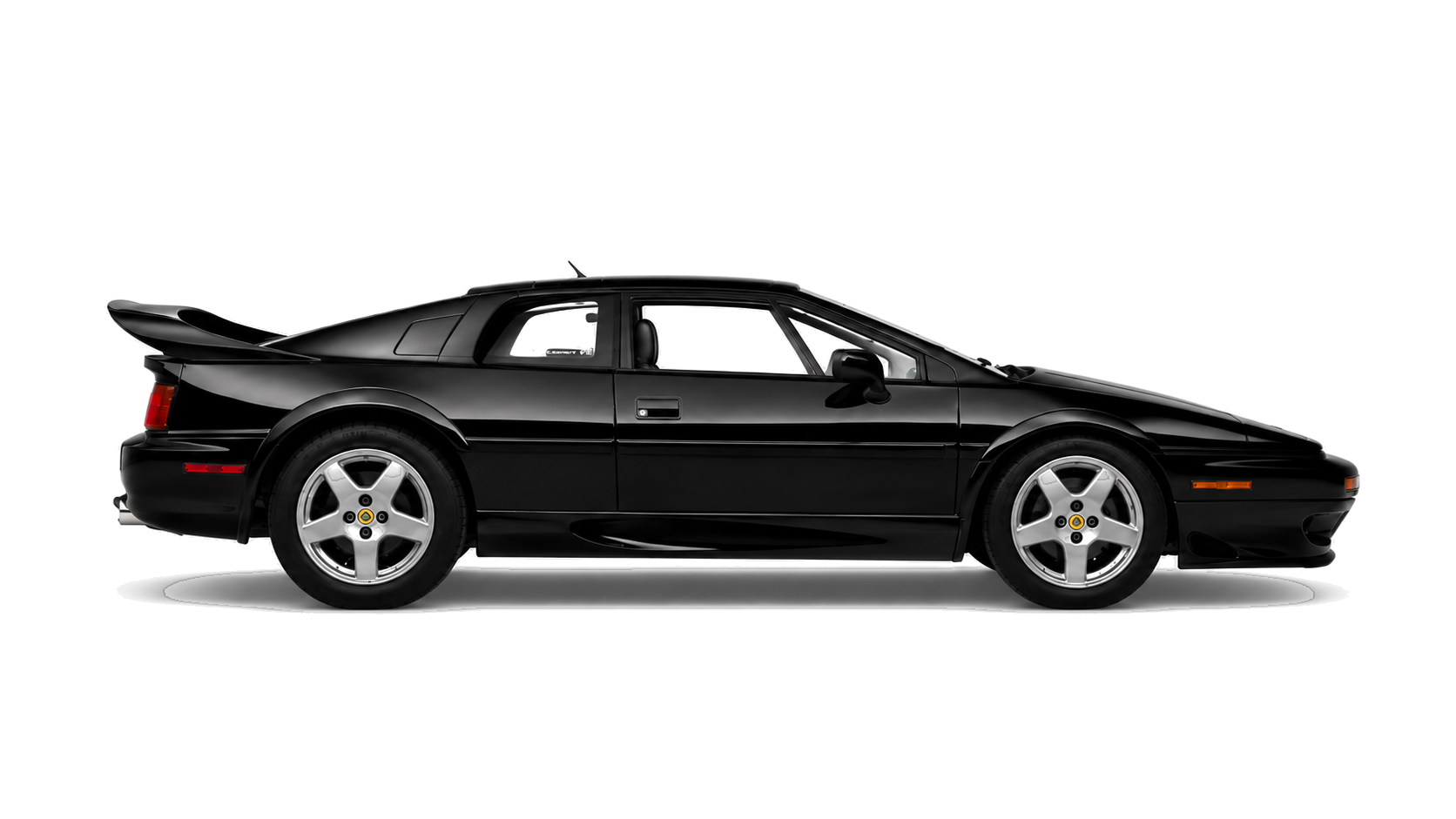
Build intent — street-biased but track-capable: more power than the stock engine with no lag and a dead-linear delivery — flat torque, power rising in a straight line with rpm, no punch — high-rev character kept, and the flat-plane note uncorked. Priorities, in order:
- Reliability / longevity — the 918 block is irreplaceable, and boost raises the stakes
- Drivability — no lag, and linear, NA-like torque and power through the whole rev range; no punch, no step, no surge
- Engine character — a high-revving engine that keeps pulling to the limiter; sound and response (see Sound)
- Peak power — explicitly last: linear, NA-like power matters more than the number
Secondary goal — replicability: documented so others on the platform can copy it, but only as a tiebreaker, not a priority.
The goal is linear, NA-like power, not peak power — the feel of a bigger naturally-aspirated engine, not a boosted one. So boost stays modest (≈ 6–8 psi pump gas, 8–10 E85): the supercharger acts like extra displacement. Power target ~400–430 hp at the crank on pump gas, 440–470 on E85 (≈ 345–370 / 380–405 whp; ~115–135 hp/L) — roughly what a 5-litre high-revving NA engine would make. Bottom end, head clamp, oil, and cooling spec'd for 600 crank hp so the engine loafs at its actual output. The torque plateau sits comfortably under the gearbox's limit rather than at it (see Transmission).
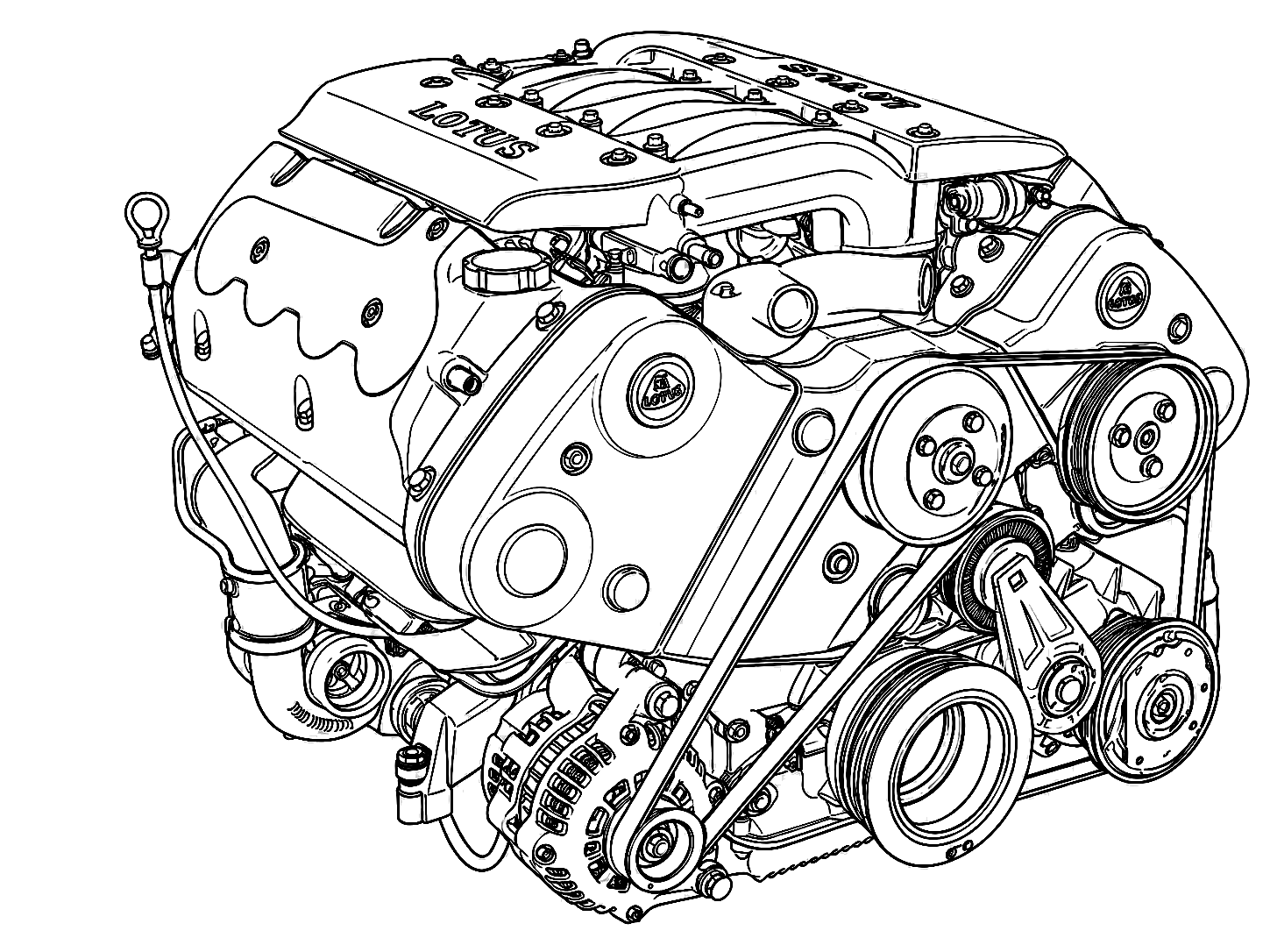
Why Supercharge
- Response. Boost is tied to crank speed, not exhaust energy — no lag, no spool threshold, throttle maps cleanly to torque. A positive-displacement blower goes further: boost from just off idle, so torque is flat across the rev range.
- Sound. The turbines were muffling the flat-plane V8. With them gone, the exhaust is free to run equal-length headers exactly like the NA build (see Sound).
- Heat. No turbos glowing in a tight mid-engine bay — exhaust-side heat drops substantially.
- Simplicity. One compressor instead of two turbos, wastegates, oil/water feeds, and hot-side plumbing.
- The cost: belt-drive parasitic loss (~10–15% of output at full boost), and an intercooler circuit that has to be engineered for heat soak.
Supercharger Choice
The first big decision — it shapes the torque curve, packaging, and how hard the gearbox is loaded. The deciding requirements: no lag, NA-like linear power with no punch, and high-rev character.
| Twin-screw PD (Whipple / Kenne Bell) | Roots PD (Eaton TVS) | Centrifugal (Rotrex / ProCharger) | |
|---|---|---|---|
| Boost curve | Near-full boost from just off idle | Near-full boost from just off idle | Rises with rpm (roughly rpm²) |
| Torque curve | Flat | Flat | Ramps up — like a bigger engine that keeps getting stronger |
| Power curve | Straight line with rpm | Straight line with rpm | Curves upward toward redline |
| Lag | None | None | None, but little low-rpm boost |
| Efficiency at this build's boost (≤10 psi) | Excellent | Good — fine at this level; falls off only at higher boost | Highest |
| Packaging | Tall valley mount, custom lower manifold | Tall valley mount; most OEM precedent (integrated intercooler + bypass) | Compact side mount |
| Sound | Distinct whine | Quieter whine | Subdued whine |
Decision: twin-screw, valley-mounted.
- NA-like push, not punch. Owners of twin-screw and Roots kits on the same car consistently describe the twin-screw as a push and the Roots as a punch. That's the feel this build wants.
- High-rev character. Twin-screws hold efficiency better at high rotor speed, so boost — and torque — keep up toward redline instead of tailing off.
- Cooler charge. Internal compression heats the air less than a Roots, which is extra knock margin at low rpm, where a PD blower loads the engine hardest. On an irreplaceable block, that margin is worth having even with an intercooler.
- Precedent. The closest analogue is the NSX: a high-revving, mid-engine NA V6 converted with a twin-screw (SCIENCEOFSPEED's 2.1L kit, built on CT Engineering's twin-screw lineage), aimed at durability and driveability rather than peak numbers. My own NSX runs the SCIENCEOFSPEED twin-screw with an intercooler at 13 psi — a known, driven reference for the feel.
- Feel benchmark. As with the F355 sound target on 918NA: drive the NSX and the 918 back to back and calibrate the 918's tip-in, torque ramp, and top-end pull to match — by feel and by logged acceleration per gear, not just dyno sheets.
- Sizing for rpm: a relatively large unit, underdriven — moving the target airflow at modest rotor speed keeps the blower efficient at the top of the rev range and the rotors inside their speed limit at the higher redline. The bypass trims the surplus it makes at low rpm. The builder sizes it against the efficiency map.
- Costs: more whine than a TVS, and height — a larger unit makes engine-cover clearance the first mock-up item. A smaller Eaton TVS is the fallback only if the twin-screw can't be packaged.
How the linear curve gets made. Linear power is flat torque: power = torque × rpm, so a flat torque line gives power rising in a straight line. A PD blower can make more low-rpm torque than wanted; the ECU-controlled bypass valve shapes it. For an NA-like feel with no punch, don't let torque arrive as a wall at 2000 rpm like a turbo-diesel — let it ramp in gently to ~3000–3500, then hold flat to ~7000, so power climbs steadily all the way to the limiter. Tip-in matters as much as the curve: the bypass closes progressively with pedal, so there's no on-boost step when the throttle opens. Every gear pulls the same way at every rpm, with no step and no surge — and the same plateau protects the UN1, the clutch, and the block.
The centrifugal is out because its boost — and torque — keep rising with rpm: no lag, but the opposite of linear.
Build Sequence
- Tear down → crack-test and measure block, liners, crank, heads. Go/no-go gate: the block is irreplaceable, so nothing gets ordered before it passes.
- Get the torque rating of the already-upgraded UN1 from the kit supplier — this sets the engine's torque ceiling (see Transmission).
- Mock up blower, lower manifold, and intercooler in the chassis; confirm belt drive and engine-cover clearance (the biggest packaging risk).
- Size the twin-screw against its efficiency map for target boost at the higher redline (large unit, underdriven); set pulley ratio.
- Port heads (mild) → flow bench → spec cam against measured flow and boost target.
- Piston-to-valve clearance → finalize piston dish (sets CR).
- Assemble → calibrate pump gas first, then E85.
Inspection gates everything; the torque plateau is chosen for feel, and the gearbox rating must sit comfortably above it. The sequencing is ultimately the builder's to set.
Engine — Build Notes
Bottom End
- Pistons: forged 2618 alloy (better tolerance of boosted detonation than 4032), custom — dished crown to target CR, thermal-barrier crown coating, top ring land thickened and positioned for boost, ring gaps set for boost and E85.
- Rods: forged/billet I-beam or H-beam spec'd for boosted compressive load; ARP2000 or Custom Age 625+ bolts.
- Bearings: coated, rod + main; clearances for boosted load.
- Crank: inspect, crack-test, polish, reuse if in spec; billet only if necessary.
- Balance: weight-matched, tight tolerance.
- Block: refresh/reline to stock bore (see Displacement). Factory main caps are already cross-bolted SG iron; main studs regardless.
Head Clamp and Liners (highest-risk item)
The 918 has push-fit wet liners clamped in place by the heads (see the 918NA page's block notes). Under boost, the head clamp is doing two jobs: sealing the gasket and holding the liners seated against cylinder pressure.
- ARP head studs, torqued to spec with the studs' own procedure.
- Liner nip measured and set on every cylinder — not assumed.
- Custom MLS head gasket, spec'd together with liner nip for boosted cylinder pressure.
- Conservative cylinder pressure is the real protection: intercooled charge, moderate CR, knock detection, and a torque plateau capped by the ECU — the blower's extra low-rpm potential is bypassed, not used.
Compression and Fuel
- Static CR: I'm thinking 9.5–10.0:1 (up from the stock ~8:1) — modest boost allows it, and higher CR makes part-throttle and off-boost response feel NA rather than boosted. Low enough to stay pump-gas (91–93) safe at 6–8 psi with port injection and an intercooled charge. A starting target, open to the builder's recommendation.
- Flex fuel, continuous blending on ethanol %: boost target, timing, and fueling all scale with ethanol content. The torque curve keeps the same shape on both fuels; E85 lifts the plateau ~10% with a little more boost and timing.
- At this modest boost, E85 is as much safety margin as power — extra knock resistance where a PD blower loads the engine hardest.
- Knock is a low/mid-rpm, high-load issue — exactly where a PD blower makes full boost. The capped torque plateau, conservative low-rpm timing, intercooling, and E85 are what make that safe; on pump gas, the plateau may need to start a little higher in the rev range.
Displacement
- Retain stock bore and stroke: 83mm × 81mm, 3506cc. Same reasoning as 918NA — one shareable spec, protects the finite supply of blocks — plus a boost-specific one: thinner liner walls and a narrower sealing land between bores are exactly the wrong direction under cylinder pressure. Boost is the cheaper, safer route to more air.
- The 918NA larger-bore notes apply, but on a boosted build I'd treat an overbore as off the table.
Cylinder Heads
- Full inspection; valve job; guides as needed.
- Mild port — consistency and cleanup, not a big NA-style porting program. Boost compensates for head flow, so the heads are far less of a power limiter than on the NA build.
- Exhaust side matters more than intake: no turbine backpressure now, so a freer exhaust port pays off.
- Flow-bench before and after.
Camshafts
- Supercharger-specific grind, designed against measured head flow. Keep overlap low: with no turbine backpressure, intake pressure exceeds exhaust pressure, and overlap blows charge straight out the exhaust.
- The stock turbo cams are a reasonable starting point and may be close; a mild custom grind for the higher redline is likely.
- Adjustable timing (vernier gears / offset keys) for dyno.
- Springs rated for boost pressure acting on the intake valve back, plus target rpm.
- Redline 7500–7800 — up from the stock ~7000, for high-rev character. Mean piston speed at 7800 with the 81mm stroke is ~21 m/s — fine with the forged rotating assembly. The underdriven twin-screw keeps rotor speed in range; valvetrain (springs, retainers, lash type) has to be spec'd for it. Power is still climbing near the limiter.
Induction
- Blower: twin-screw (Whipple-type; large unit, underdriven, by efficiency map), valley-mounted on a custom lower manifold that adapts to the 918's intake ports, belt-driven off the accessory drive. The accessory drive is at the front of the engine (transaxle aft), near the bulkhead — belt wrap, idlers, and tensioner are a key mock-up item. 8- or 10-rib belt with an auto-tensioner sized for blower load; belt slip shows up as torque sag, which breaks the linear curve, so don't skimp.
- Air path: filter fed from the Esprit side scoops → drive-by-wire throttle → blower → intercooler → lower manifold → runners. Throttle ahead of the blower, so the plenum volume after it is small — instant response.
- Intercooler: air-to-water bricks integrated in the lower manifold, under the rotors; their own low-temperature circuit, electric pump, and a dedicated heat exchanger with its own ducting. Sized for repeated track pulls, not a single dyno run; heat soak is the main enemy, and IAT rise shows up as torque fade late in a session.
- Bypass valve: electronically actuated, ECU-controlled. Open at cruise (no pumping loss), closes progressively with pedal. It's the tool that shapes the flat torque plateau, and it trims boost on lower ethanol content — pulley sized for the E85 target, bypass bleeds it down on pump gas.
- Clearance: blower + manifold height under the Esprit engine cover is the single biggest packaging risk. Mock up before anything is ordered. Fallback: a remote-mounted blower feeding a low manifold through the intercooler — a bit more volume to fill, still no meaningful lag.
- Runner lengths in the lower manifold tuned for a broad, flat VE curve rather than a peak — linearity over peak power.
Fuel and Ignition
- Standalone ECU (MoTeC / Cosworth Pectel / EFI Euro — tuner's call) with flex-fuel and torque management. Full custom harness.
- Load sensing: speed-density on MAP — a single throttle and pressurized plenum give a clean signal (unlike the NA build's ITBs).
- Individual coil-on-plug; colder plugs, tighter gap for boost.
- Flex sensor; continuous ethanol-blended maps for boost, timing, and fuel.
- Torque-based control: the ECU targets a torque value from pedal position and holds the flat plateau via bypass valve, throttle, and timing — linear pedal, linear output. Per-gear limits on top where needed.
- Wideband O2 per bank; EGT per bank; IAT after the intercooler; fuel pressure and ethanol content logged.
- Per-cylinder knock detection — backstop only; base timing stays conservative.
- Injectors: ~1000cc class, high-impedance, E85-rated — final size from the tuner's fuel-flow math at peak E85 power with duty-cycle margin.
- Fuel system: return-style, boost-referenced regulator; in-tank pumps (twin, or a brushless pump with controller) in the ~450 L/h class; E85-compatible lines, seals, and rails throughout. E85 needs ~30–40% more fuel volume than gasoline.
Oil
- Dry sump — same reasoning as 918NA, plus boost adds blow-by and bearing load. Scavenge staging per pan/crankcase; a 90° V8 typically wants 4+ scavenge stages + 1 pressure.
- Oil tank with anti-aeration baffling; thermostatic oil cooler, sized up for boost.
- Crankcase ventilation: baffled catch can / air-oil separator — a boosted engine pushes more blow-by.
- The twin-screw has its own self-contained gear-case oil — a service item, separate from the engine.
Cooling
- Upsized radiator core + improved ducting; boost adds heat to the coolant.
- Higher-flow water pump or supplementary electric pump.
- Separate low-temperature intercooler circuit (see Induction) — don't share a radiator with the engine.
- Proper bleed routing for mid-engine layout.
- Spec for sustained track use, not just street.
Exhaust
- Custom equal-length headers, stainless or Inconel. Primary length and diameter for the target rpm and flat-plane firing order — no turbines in the way now.
- Merge collectors; X or H-pipe between banks — builder's call.
- Valved silencer — streetable without killing the note.
- Wrap / ceramic coat for the tight bay; less critical without turbos, still worthwhile.
Sound
The supercharger conversion frees the same foundation the NA build exploits — a 90° flat-plane V8 — because the turbines were what was muffling it. The exhaust can be tuned toward the F355 benchmark the same way:
- Equal-length primaries into a 4-into-1 collector per bank keep each bank's evenly spaced pulses intact.
- Crossover, collector and tailpipe sizing set pitch and rasp — build for a quick swap and choose by ear on the dyno.
- Valved silencer, F355-style: quiet cruise, opens with rpm/throttle.
- Induction: a twin-screw adds a distinct whine that rises with rpm, on top of the flat-plane exhaust — a different character from the NA build's open-trumpet bark. Decide how much of it to hear in the cabin; intake silencing and blower inlet design can tone it down.
Brakes / Vacuum
- With the throttle ahead of the blower and the bypass open, the manifold makes vacuum off-boost — the stock brake booster should work. Add a check valve for boost, and verify on the car; an electric vacuum pump is the fallback.
Chassis — Build Notes
Transmission
The dominant constraint on this build. Torque, not hp, is what breaks gearboxes — and Lotus capped the stock turbo engine at 295 lb-ft specifically to protect the Renault UN1. This build will exceed that at the crank, so:
- Done: the UN1 already has the standard UK upgrade kit fitted.
- Get the upgraded box's torque rating from the kit supplier before the power target is final — and ask whether it's rated for sustained track use or street. That number sets the engine's torque ceiling, enforced by the ECU's torque management by gear.
- Dedicated gearbox oil cooler, if not already fitted.
- Driveshafts and CVs checked against the new torque.
- If the UN1 can't be made to hold it, the alternative is a different transaxle — a major chassis project with its own budget and timeline, and outside this page's scope.
Clutch
- Twin-plate, organic facings — my lean. Two plates double the friction area at the same diameter, so torque capacity rises without the heavy pedal of a high-clamp single plate, and organic facings keep engagement smooth in traffic. Sintered / cerametallic plates hold more but grab and chatter — track-only, wrong for a street-biased car.
- Capacity: ~1.2–1.3× peak crank torque — roughly 400–450 lb-ft for the E85 plateau. Not much more: a clutch that can slip on a shock load (a missed shift, wheel hop) is a fuse for the gearbox. Size it to sit just under the UN1 kit's rating with margin over the engine.
- Flywheel: steel, matched to the clutch assembly, moderately lightened — sharper response, but not so light that idle and low-speed pull-away get fussy. Steel, not aluminum, for heat capacity.
- Release system: confirm the twin-plate's release travel and bearing work with the UN1's stock release arrangement; a hydraulic concentric slave is the usual fix if not. Master cylinder bore sized for pedal effort.
- Fit: check bellhousing clearance, starter ring gear, and crank spigot/pilot early — clutch and flywheel are often custom to the 918/UN1 pairing, with lead time.
- A PD blower makes full torque from launch rpm, so the clutch sees it from the moment it engages. The ECU's torque plateau, plus a launch / low-rpm limit in 1st, keeps shock loads in check.
- Ballpark $3–6k for a twin-plate assembly and flywheel, plus release-system parts if needed.
Suspension
- MCS 3-way adjustable dampers, front and rear.
- Spring rates / geometry around modern tire grip + use case.
- Corner-balance after all weight changes (dry-sump tank, supercharger, intercooler circuit, headers) are final.
Brakes
- Upgrade to match the power — more speed down the straights means more heat into the brakes.
Tires
- Modern compound (Cup 2 / Trofeo R / equivalent), staggered, grip-first.
Open Items
Where builder experience matters most:
- Gearbox torque rating — the UN1 is already upgraded, but its rating sets the real power ceiling. Everything else can be built for more.
- Block and head clamp under boost — any crack, water-jacket corrosion, or main-saddle damage found at inspection could end the build. Protection: ARP studs, verified liner nip, custom MLS gasket, moderate CR, intercooled charge, knock detection.
- Packaging and heat — a valley-mounted blower, lower manifold, belt drive, and intercooler heat exchanger all have to fit a mid-engine bay with the accessory drive against the bulkhead, under the engine cover. Mock up first.
- Intercooler heat soak — air-to-water works brilliantly for one pull and can fade on a hot track day; size the circuit for repeated laps.
- Calibration: one-off supercharged flat-plane + flex + torque-based bypass control = no base map. Budget ~40–60 hr dyno, refined over the first 1000–2000 miles.
Targets (rough)
My rough projections to frame expectations — the real numbers come from the gearbox rating, the blower match, and the dyno. Torque is shown as a plateau: power follows from it (hp = torque × rpm ÷ 5252).
| Metric | Pump Gas (91–93) | E85 |
|---|---|---|
| Boost (psi, peak) | 6–8 | 8–10 |
| Torque plateau (crank lb-ft) | 300–315 | 330–345 |
| Plateau range (rpm) | ~3500–7000 | ~3000–7000 |
| Peak power (crank hp) | 400–430 | 440–470 |
| Peak power (whp) | 345–370 | 380–405 |
| Power peak (rpm) | 7200–7600 | 7200–7600 |
| Redline | 7500–7800 | 7500–7800 |
- Stock was 350 hp with torque capped at 295 lb-ft, delivered with turbo lag and a step. This build is a modest step up in number and a large one in delivery: same-shaped curve on both fuels, linear from idle to redline.
- E85 adds ~10% here — deliberately less than it could, keeping the build NA-like.
- The blower could make well over 400 lb-ft; the plateau is a feel choice, kept under the gearbox's rating with margin. More is available later by raising the plateau, without touching hardware — the NSX runs happily at 13 psi intercooled, so the E85 hardware here has headroom if the gearbox rating allows.
- Curb ~1420–1460 kg (valley blower + intercooler); ~275–330 hp/tonne at the crank.
- Powerband (rough): boost building from just off idle to ~2500–3000; flat torque from there to ~7000, tapering gently to a 7500–7800 redline; power a straight line. Instant throttle, no lag, no punch, no step.
Timeline (rough)
A rough placeholder — the builder's schedule and lead times replace this.
- ~18 months (range 14–24) from contract to shakedown complete — shorter than 918NA, with no cast plenum pattern or NA porting program.
- Cost: see Cost Estimate.
- Long poles: custom rotating assembly, blower lower manifold (design + fab/cast) and intercooler mock-up, header fab (waits on engine mock-up), calibration.
Build Status
To be updated as the project progresses.
- [x] UN1 gearbox upgrade kit fitted
- [ ] Contract signed with builder
- [ ] Engine removed and disassembled
- [ ] Block inspection complete
- [ ] Gearbox torque rating confirmed
- [ ] Blower, lower manifold, and intercooler packaging mock-up
- [ ] Blower sized and pulley ratio set
- [ ] Head flow benchmarking complete
- [ ] Cam profile finalized
- [ ] Rotating assembly machined
- [ ] Fuel system installed (E85)
- [ ] Engine assembled
- [ ] Initial calibration on dyno (pump gas)
- [ ] E85 calibration
- [ ] Shakedown miles begun
- [ ] Build considered complete
Last updated: October 29, 2026